
Understanding the National Construction Code 2022: Energy Efficiency Minimum Requirements for New Homes
1/10/20263 min read
Introduction to the National Construction Code 2022
The National Construction Code (NCC) 2022 introduces significant updates regarding energy efficiency minimum requirements for new homes. These regulations aim to enhance the sustainability and livability of dwellings across Australia. With a growing emphasis on reducing carbon footprints and energy consumption, it is crucial for homeowners and builders to understand these new guidelines.
NatHERS and Whole of Home Ratings
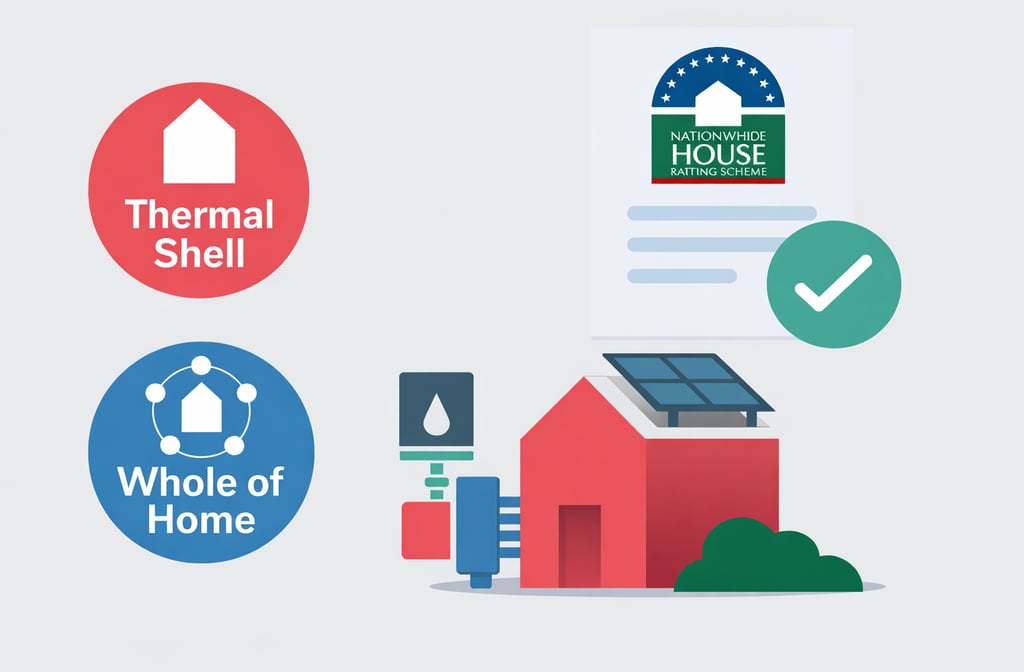
The National Construction Code (NCC) 2022 represents a major shift in how residential energy efficiency is assessed in Australia. For the first time, compliance is no longer focused solely on the building fabric — it now also considers how the home’s systems and appliances contribute to total energy use.
For new Class 1 homes and certain alterations and additions, NCC 2022 introduces two linked but distinct requirements:
A higher minimum 7-Star NatHERS thermal performance, and
A mandatory Whole of Home energy rating.
7-Star NatHERS Thermal Performance
Under NCC 2022 Volume Two – Part H6, all new houses must achieve a minimum 7-Star NatHERS rating for thermal performance.
This requirement, set out under Performance Requirement H6P1, assesses how well the building shell performs without relying on mechanical heating or cooling. Key elements include:
Insulation to roofs, walls and floors
Window and glazing performance
Building orientation and layout
Shading and solar control
Construction detailing and air movement
A higher NatHERS star rating means a home requires less energy to heat and cool, resulting in improved comfort and lower running costs over its lifetime.
Whole of Home Energy Requirement
In addition to thermal performance, NCC 2022 introduces a Whole of Home energy usage requirement under Performance Requirement H6P2.
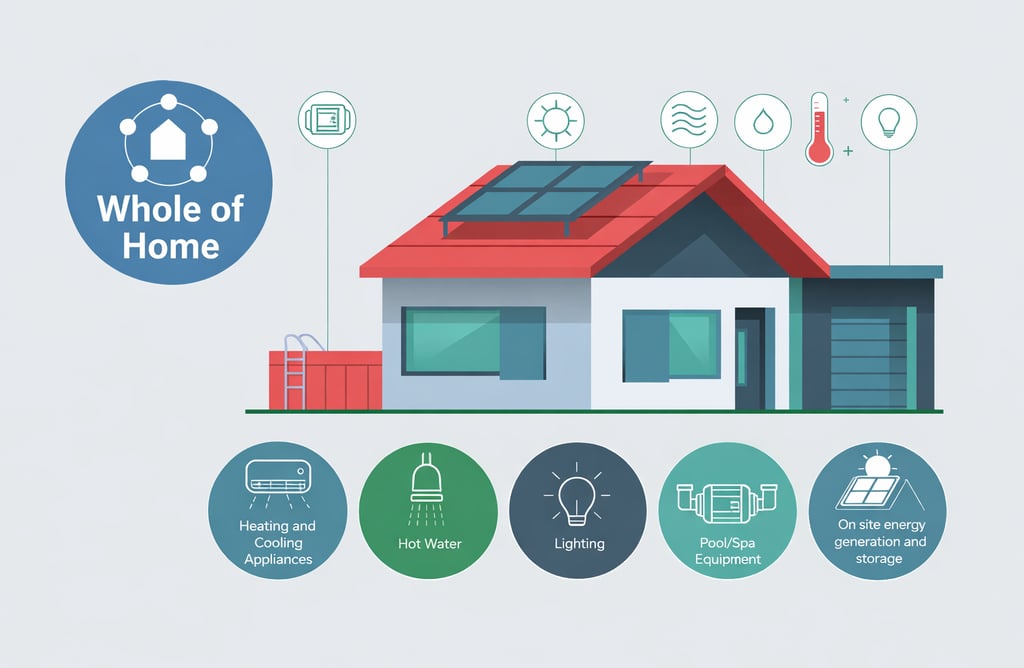
This requirement recognises that energy efficiency is influenced not only by the building envelope, but also by the fixed services installed within the home. The Whole of Home assessment accounts for the estimated annual energy use of:
Space heating and cooling systems
Domestic hot water systems
Fixed lighting
Pool and spa pumps (where applicable)
On-site renewable energy systems, such as solar PV
Rather than prescribing individual appliance efficiencies, the NCC uses an annual energy budget approach, encouraging better system selection and integration.
Minimum Whole of Home Score – Specification 42, Clause S42C3
The Deemed-to-Satisfy pathway for demonstrating compliance with the Whole of Home requirement is set out in NCC 2022 Volume Two – Specification 42.
Specifically, Clause S42C3 requires that a Class 1 building must achieve a Whole of Home rating of not less than 60 when assessed using accredited NatHERS Whole of Home software.
This score confirms that:
The building meets the 7-Star thermal performance benchmark, and
The combined energy use of fixed services remains within the NCC’s allowable energy budget
If the minimum score of 60 is not achieved, the design must be adjusted — either through improvements to the building fabric, more efficient systems, or the inclusion of renewable energy.
What this Means in Practise
Under NCC 2022, energy compliance must now be considered holistically and early in the design process. Decisions around glazing, insulation, heating and cooling systems, hot water, and solar all interact and affect the final outcome.
The updated framework aims to:
Reduce long-term household energy costs
Improve comfort in both hot and cold conditions
Lower emissions from residential buildings
Deliver homes that are more resilient to future energy price rises and climate extremes
Final Thoughts
The combination of a 7-Star NatHERS minimum and a Whole of Home score of at least 60 under S42C3 marks a clear move toward better-performing, lower-energy homes across Australia.
For homeowners, this means more comfortable and efficient houses.
For designers and builders, it reinforces the importance of engaging a NatHERS assessor early, before key design decisions are locked in.
Practical building performance advice for residential and commercial projects.
Contact Info
Phone: +61 487 185 820
Email: info@betterhomeperformance.com.au